Chapter 1: How the loop works · Lesson 1 of 7 · 6 min read
The loop in 30 lines
An agent is a while-loop around a model call. Here is the whole thing, with nothing hidden.
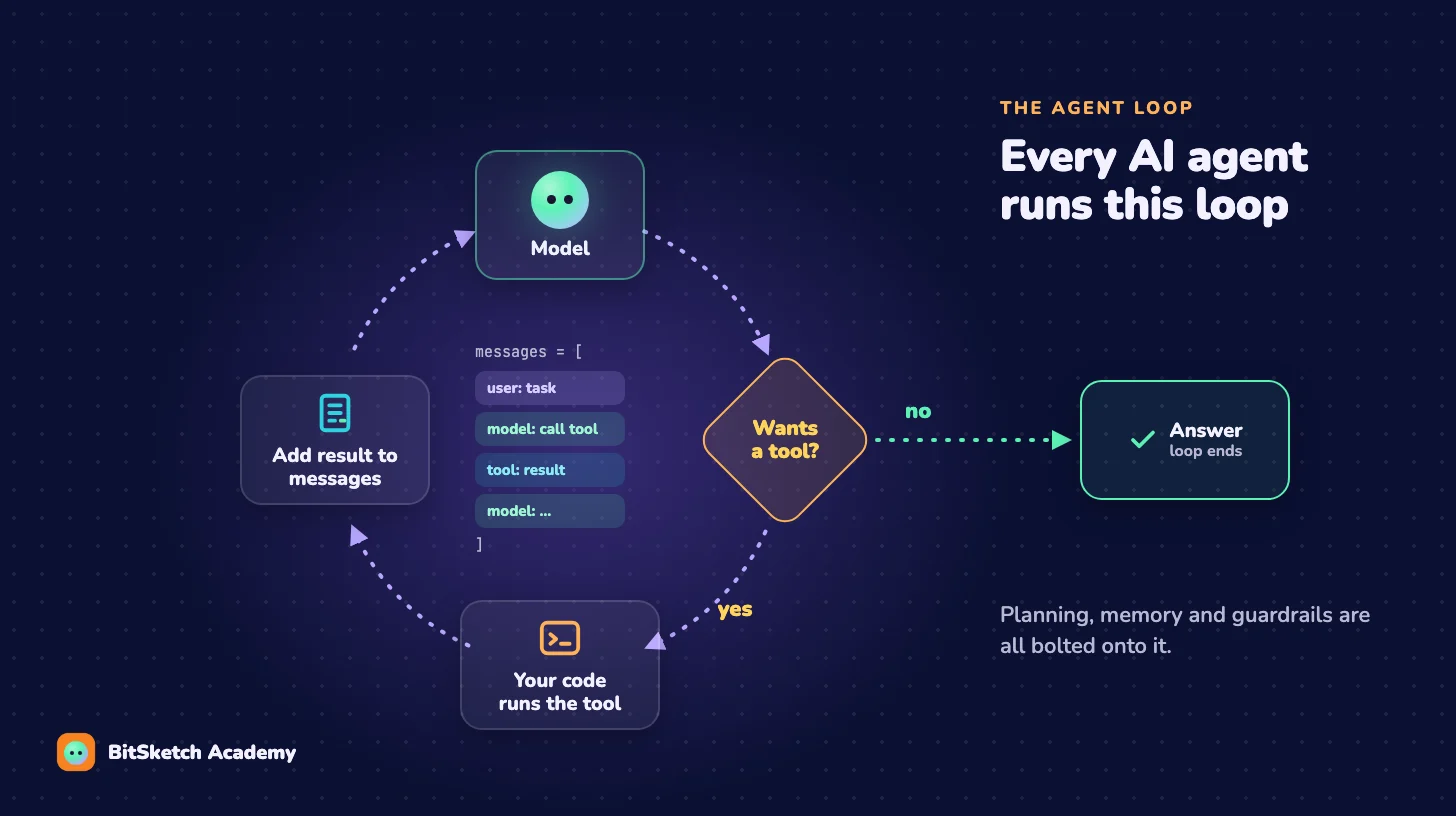
Every AI agent, no matter which framework it uses, runs the same loop:
- Send the conversation so far to the model.
- If the model asks to use a tool, run it and add the result to the conversation.
- If it doesn't, it has answered. Stop.
That's it. Everything else (planning, memory, sub-agents, guardrails) is something bolted onto this loop.
The whole thing
Here it is in plain Python. call_model stands for whichever model API you use; it takes a list of messages and returns the model's reply.
def run_agent(task, tools, call_model):
    messages = [{"role": "user", "content": task}]

    while True:
        reply = call_model(messages, tools=tools)
        messages.append(reply)

        if not reply.tool_calls:          # no tool requested: this is the answer
            return reply.content

        for call in reply.tool_calls:     # the model asked for one or more tools
            result = tools[call.name](**call.arguments)
            messages.append({
                "role": "tool",
                "tool_call_id": call.id,
                "content": str(result),
            })
Read it twice. Notice three things:
- The model is stateless. It remembers nothing between calls. The
messageslist is its memory, and you resend all of it every time. - The model decides when to stop, by simply not asking for a tool. You are trusting it to know when it's done.
- There is no brake.
while Truewill happily run forever if the model keeps asking for tools.
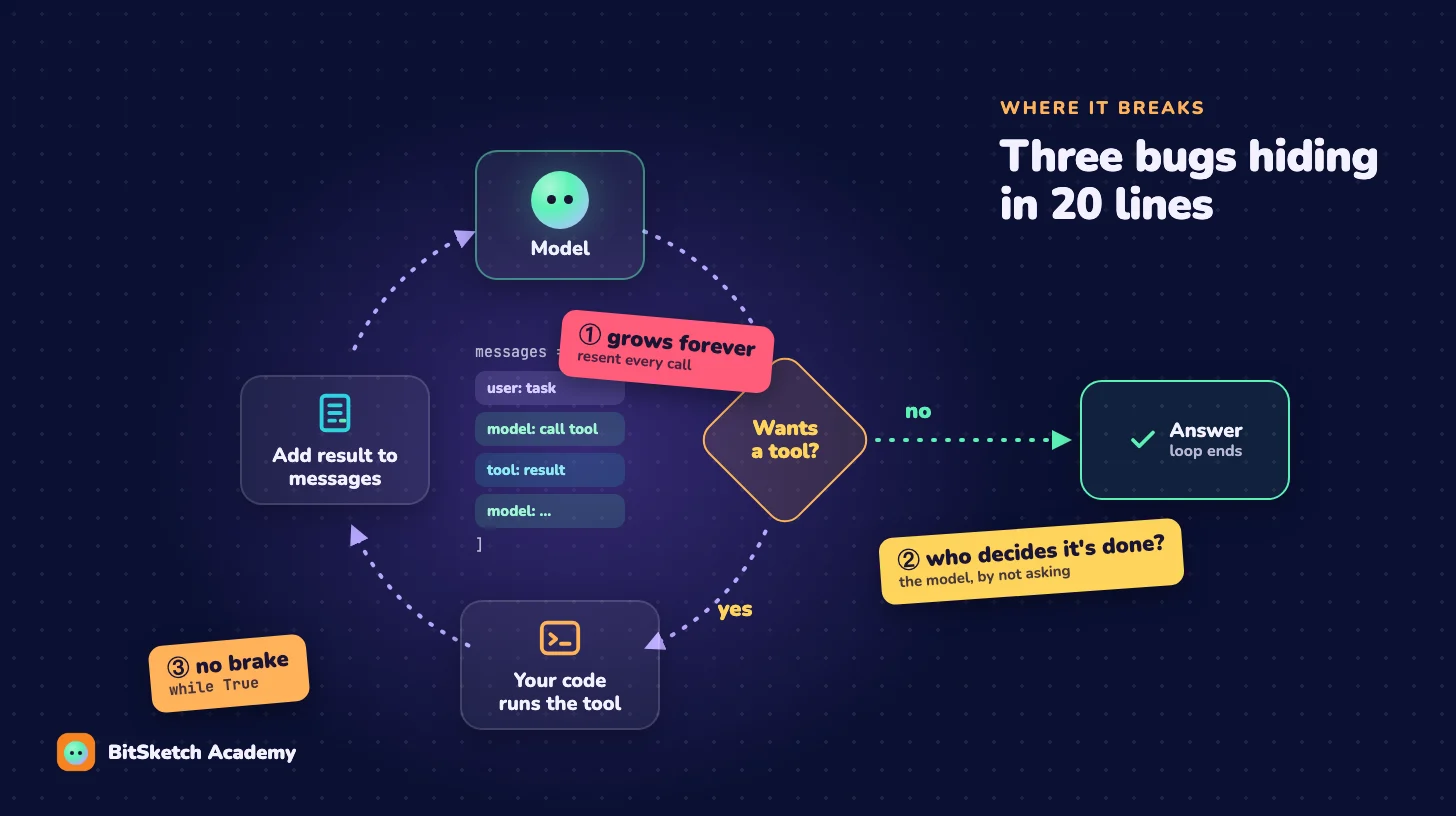
The last two are where real agents go wrong, and lessons 3 and 4 are about fixing them.
Walking through one run
Say the task is "What's 17% of the price of order #4411?" and the agent has one tool, get_order.
| Step | Who | What gets added to messages |
|---|---|---|
| 1 | you | user: the task |
| 2 | model | assistant: "call get_order(id=4411)" |
| 3 | you | tool: {"price": 250} |
| 4 | model | assistant: "17% of $250 is $42.50." (no tool call, loop ends) |
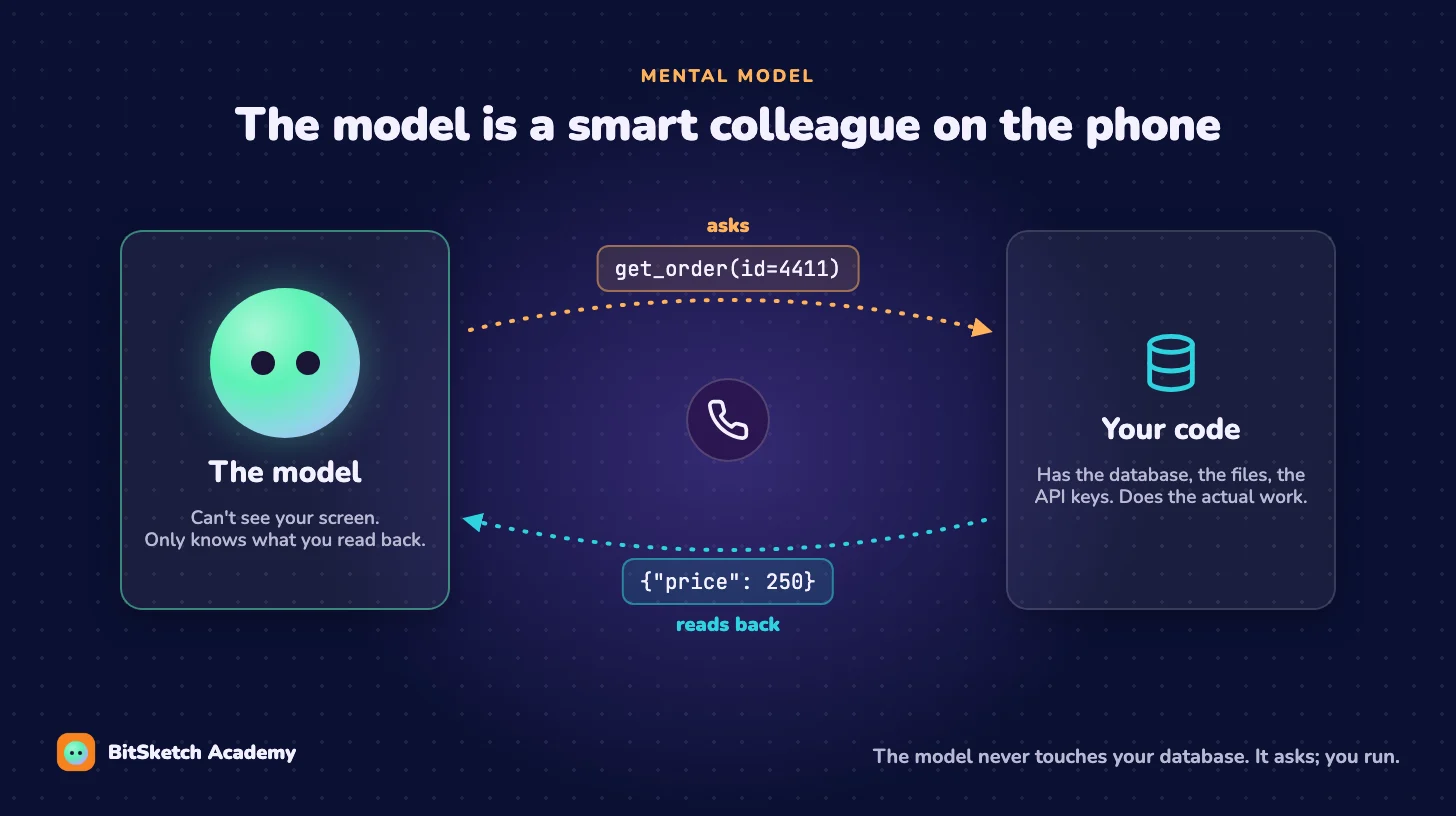
Two model calls, one tool call. The model never touched your database. It asked, and your code did the work.
Mental model: the model is a very smart colleague on the phone. They can't see your screen. They can only tell you what to do, and they only know what you read back to them.
Why frameworks feel magic
Open the source of any agent framework and you'll find this loop, wrapped in classes, retries, streaming and logging. Once you can see it, the framework stops being a black box: "max iterations" is a brake on while True, "memory" is something that edits messages, and "tool schema" describes tools to the model.
In the next lesson we look at the contract between the model and your tools, because that's where most beginner bugs live.